
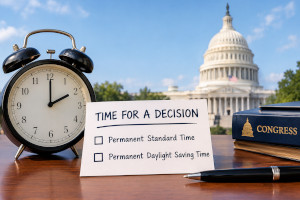
 Here we go again.
It’s that time of year when U.S. states and territories may need to adjust their schedules for the end of Daylight Saving Time (DST) on November 1, 2026, even if they don’t observe it themselves.
U.S. States that don't observe DST:
-
Hawaii: Does not change its clocks throughout the year.
-
Arizona: Most of the state does not observe DST, with one exception: the Navajo Nation observes it.
U.S. territories that also don't observe DST:
-
American Samoa
-
Guam
-
Northern Mariana Islands
-
Puerto Rico
-
U.S. Virgin Islands
These locations, along with any location that deals with them, may still need to adjust their schedules to stay aligned. This change can have a ripple effect on scheduled meetings, promotional periods, marketing campaigns, customer communications, deadlines, and other time-sensitive activities. For example, a promotion scheduled to begin at a specific time may start an hour earlier or later than expected.
To avoid confusion and disruptions, teams should review upcoming schedules, confirm time zones for meetings and events, and verify the start and end times of promotions and campaigns. Even when our clocks don’t change, our schedules may need to. A little preparation can go a long way toward ensuring a smooth transition.
So here I am, reviewing my checklist of tasks that need to be adjusted to keep my schedule aligned. Maintaining this checklist helps ensure nothing is overlooked, but it also takes a considerable amount of time. These are necessary tasks, but they take time away from my primary responsibilities and the actual work I need to accomplish.
Congress needs to make a definitive decision: Should the country adopt permanent Standard Time or permanent Daylight Saving Time? Either option has its advantages and drawbacks, but maintaining the current system indefinitely only prolongs the inconvenience. It’s time for Congress to settle the issue, establish a consistent national policy, and give Americans one less thing to adjust to twice a year.