
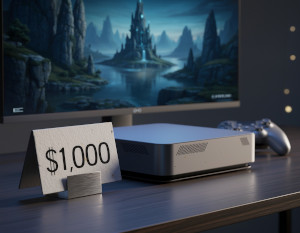
 Will four-digit price tags become the new standard?
Rumors suggest that the memory and storage components alone of a next-generation gaming console could cost nearly $700 to manufacture.
And that’s before factoring in the CPU, GPU, cooling system, motherboard, power supply, chassis, controller, and all the other components needed to bring the system to life.
If these estimates are accurate, a retail price of $1,000 or more for a next-generation console may not be out of the question. But at that price, how many consumers would still consider a console a worthwhile investment?
Personally, I’d be hard-pressed to pay a premium for a gaming console without a disc drive, especially when a gaming PC offers more flexibility and value, including access to DRM-free games.
Rather than rush into another hardware generation, I believe the current console generation should be extended until at least 2032. By then, component prices may have stabilized, potentially making next-generation hardware more affordable for manufacturers and consumers alike.
There’s also a compelling creative argument for extending a console generation: the technology often reaches its full potential in its later years.
Developers become more familiar with the hardware, game engines mature, development tools improve, and studios learn to squeeze more performance from existing systems. With fewer technical hurdles to overcome, more resources can go toward creating richer worlds, better gameplay, and more polished experiences.
That matters more than ever in an industry where big-budget games routinely take five years or longer to develop. A project that begins today could easily arrive after the next console generation launches, forcing developers to navigate a transition between platforms. Extending the current generation would give studios more time to optimize their games for a stable hardware target rather than continually chasing the next technological leap.
This could be particularly beneficial for smaller studios, which often lack the resources to develop for multiple generations simultaneously. A longer cycle would give them more time to master existing hardware without the added expense and uncertainty of adapting to a moving target.
Nintendo offers an interesting example of the long-generation strategy. The original Switch continued to receive first-party support for more than nine years, demonstrating that a platform can remain relevant well beyond the typical console cycle.
In 2026, the Switch 2 also illustrates the appeal of a different approach to hardware design: prioritizing an accessible price point and practical performance over competing solely on cutting-edge specifications.
Of course, extending a generation indefinitely isn’t the answer. New hardware can unlock meaningful advances in performance, visuals, and gameplay. But those improvements need to justify the cost, especially if console prices begin approaching four figures.
The question isn’t simply how powerful the next console can be. It’s whether that extra power will be worth the price.
If the next generation means paying $1,000 or more for a system that offers fewer ownership freedoms than a gaming PC, perhaps the industry should take a step back and reconsider its priorities.
Sometimes, the smartest next step isn’t moving forward. It’s making the most of what we already have.